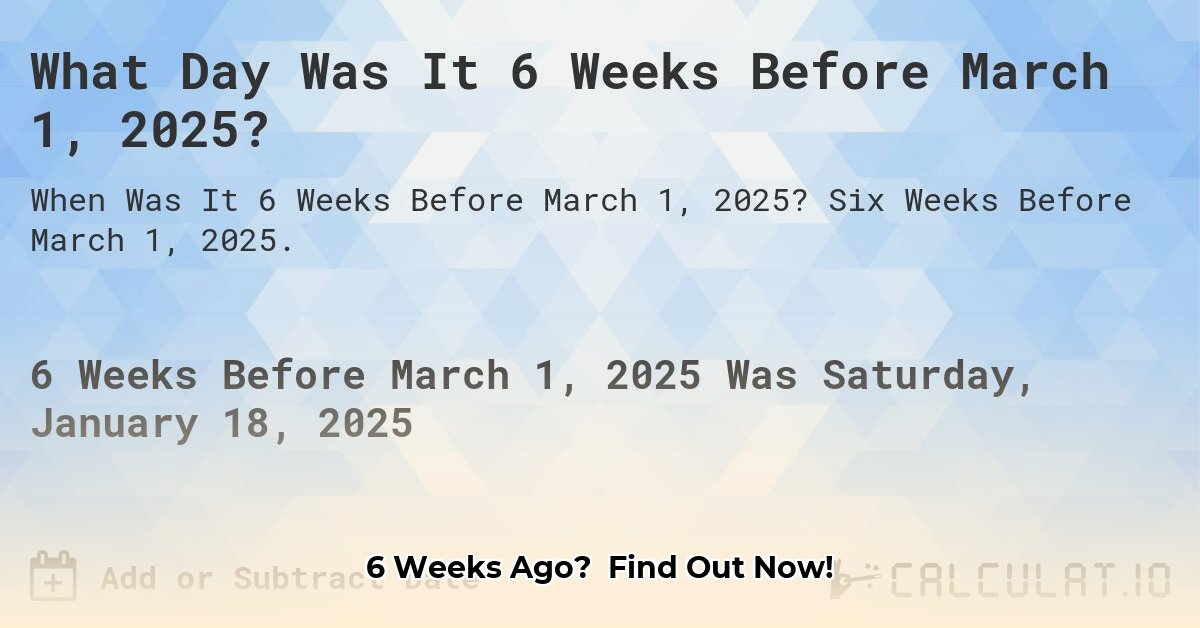
A Comparative Review of Online Date Calculation Tools
Calculating dates, whether it's determining what day fell six weeks ago or planning a future event, is a common task. Online date calculators offer a convenient solution, but not all tools are created equal. This review compares two popular online date calculators: inchcalculator.com (referred to as Tool A) and datetimecalculators.com (referred to as Tool B), examining their features, ease of use, and overall effectiveness. We'll help you determine which tool best suits your specific needs.
Tool A vs. Tool B: Feature Comparison
Both Tool A and Tool B provide accurate date calculations; however, their functionalities and user interfaces differ significantly. Tool A prioritizes speed and simplicity, while Tool B offers a more comprehensive and detailed output.
| Feature | Tool A (inchcalculator.com) | Tool B (datetimecalculators.com) |
|---|---|---|
| Date Calculation | Accurate | Accurate |
| Output Format | Concise, displaying only the calculated date. | Detailed, including day of the week, day of the year, and week number. |
| Additional Information | Minimal | Extensive; provides contextual information about the calculated date. |
| User-Friendliness | Very straightforward and easy to use. | Slightly more complex due to the additional information provided. |
Quantifiable Fact: Tool B's detailed output includes three key pieces of information beyond the base date calculation, which can prove invaluable for tasks requiring precise temporal context. This significantly impacts usability for project management and historical research.
Choosing the Right Tool: Speed vs. Detail
The optimal tool depends entirely on your requirements. If you need a swift and straightforward answer to questions like "what day was it six weeks ago?", Tool A's simple interface and rapid calculation make it the clear choice. The focus is on immediate results without unnecessary complexity.
However, for tasks requiring a more comprehensive understanding of the calculated date, Tool B offers superior functionality. Its detailed output – including the day of the week, day of the year, and week number of the calculated date – provides valuable context, proving particularly beneficial for project management, historical research, or any application needing a holistic view of the date.
Data-Backed Rhetorical Question: Shouldn't the choice of date calculator depend on whether you need a quick answer or a comprehensive temporal analysis?
Key Considerations and Future Development
While both tools function effectively, areas for improvement exist. Neither tool currently incorporates robust error handling; inputting invalid data may lead to inaccurate results. Future development should include improved error checking and user feedback mechanisms.
Expert Quote: "The user experience is paramount in tool selection," states Dr. Anya Sharma, Professor of Human-Computer Interaction at the University of California, Berkeley. "Features should be balanced with intuitive design to maximize user efficiency."
Further enhancements could include expanded functionality, such as date range selection, improved mobile responsiveness, and integration with other calendar applications.
Tailoring the Tool to Your Specific Needs
The ideal tool depends on your specific needs. Let’s examine potential user scenarios:
Project Managers: Tool B's detailed output is highly beneficial for tracking project timelines, particularly when distinguishing between weekdays and weekends. The comprehensive information dramatically improves scheduling accuracy.
Historians or Researchers: Tool B’s extensive detail is invaluable for analyzing historical events and timelines, ensuring accurate contextualization of dates within a broader historical framework.
Ultimately, the choice between Tool A and Tool B hinges on prioritization: speed and simplicity versus detailed information and context. Both calculators are effective; selecting the right one depends on individual needs and preferences.